
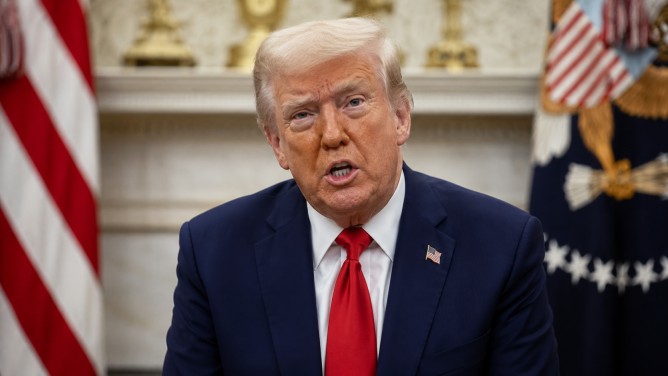
In a recent statement, U.S. President Donald Trump assured that the administration’s proposed tariffs on Canadian imports are strictly related to ongoing trade disagreements and not influenced by the wildfires that have been sending smoke into parts of the United States. This clarification came during a meeting with the President of Lebanon, where Trump emphasized that the tariffs are a response to issues surrounding trade with Canada, rather than environmental factors.
Trump accused Canadian leaders of implementing policies that disadvantage American farmers, echoing his administration’s ongoing criticism of Canada’s trade practices. His comments followed earlier statements where he appeared to hold Canada responsible for insufficient wildfire management, which had led to speculation about a possible connection between the fires and the U.S.’s trade strategies.
The U.S. government recently announced its intention to introduce a 50 percent tariff on a majority of Canadian imports. This move is justified by claims of discriminatory actions against U.S. products such as automobiles, dairy, and alcoholic beverages. Despite these allegations, Canadian officials have denied any wrongdoing and are calling for a return to negotiations to address the trade conflict.
With the proposed tariffs set to be enacted within 30 days if no agreement is reached, there is growing concern over the uncertainty this situation poses for the economic relationship between the United States and Canada. The potential impact of these tariffs underscores the importance of finding a diplomatic solution to the trade tensions between the two neighboring countries.