
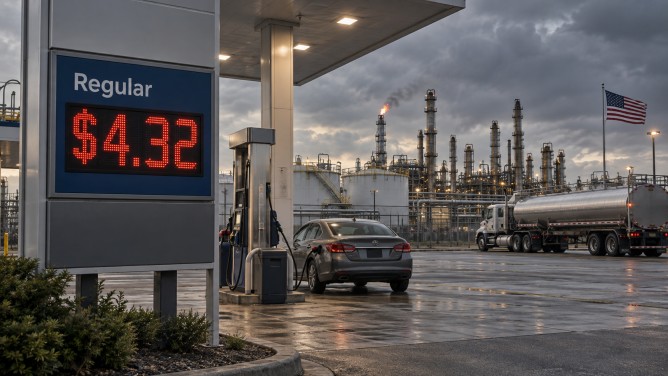
Amid ongoing global tensions and disruptions in oil supply, gasoline prices in the United States have surged to a significant high, impacting both consumers and industries. The average cost of regular gasoline has climbed to $4.32 per gallon, reflecting a steep increase of nearly 25 cents in just two weeks, according to the US Energy Information Administration. This rise is particularly stark compared to the same period in 2024, when the average price was around $3.18 per gallon.
The primary driver behind the escalating gasoline prices is the volatility in the global crude oil market. Conflicts involving regions such as the Middle East, alongside the situations in Iran and Ukraine, have heightened concerns over oil supply stability, consequently pushing energy prices upward. This situation extends beyond just gasoline, with diesel prices also reaching unprecedented levels, thereby exerting additional pressure on transportation and shipping costs. The increased expenses associated with diesel can lead to higher costs for moving goods, potentially affecting consumer prices more broadly.
Typically, gasoline prices experience a decline in the fall as US refiners transition from the more costly summer-grade fuel to less expensive winter-grade formulations. However, experts suggest that ongoing geopolitical risks could temper the usual seasonal decrease this year. This uncertainty adds to the broader challenges faced by the US energy sector, which is also grappling with a diminished Strategic Petroleum Reserve. Recent significant withdrawals have left the reserve with less emergency oil, potentially limiting the government’s capacity to address future major supply disruptions.
As the global oil markets remain sensitive to developments in the Middle East and the conflict between Russia and Ukraine, energy analysts anticipate continued price volatility. While any seasonal drop in gasoline prices might offer temporary relief to American consumers, the persistent supply risks are likely to keep prices elevated. This complex interplay of factors underscores the delicate balance of the current energy landscape and its far-reaching implications for both the economy and everyday life.