
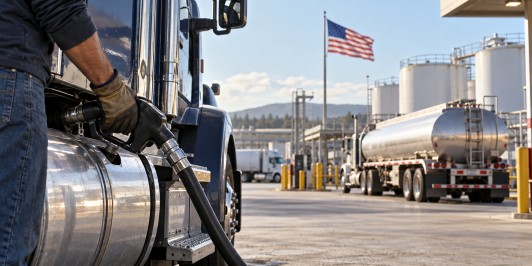
As diesel prices in the United States soar to unprecedented levels, the Trump administration is contemplating a 90-day ban on diesel exports. This potential measure aims to boost domestic supplies and relieve escalating prices, although its effectiveness remains uncertain. The move would redirect diesel intended for overseas markets back to the U.S. in hopes of stabilizing prices domestically. However, experts caution that the impact might be limited and could introduce additional complexities for the U.S. fuel industry.
A significant challenge lies in the uneven distribution of diesel supplies across the country. While much of the refining capacity is located along the Gulf Coast, shortages are increasingly evident in the Northeast and West Coast regions. The current infrastructure poses limitations, as pipelines are operating near full capacity, making it difficult to transport additional fuel from the Gulf Coast to areas in need.
Alternative transportation methods, such as moving diesel by water, could alleviate some distribution issues but would likely incur higher costs and longer transit times. Consequently, even with increased domestic supplies, prices in shortage-affected regions may not see significant reductions.
Global market conditions also play a crucial role in determining U.S. diesel prices. International fuel prices and supply dynamics influence the domestic market, as U.S. refiners often prioritize overseas sales when global prices are favorable. Recent geopolitical tensions, including disruptions to Russian refining capacity and the ongoing Iran war, have further tightened global supplies, exacerbating price pressures.
Historically, the U.S. has implemented export restrictions during periods of market stress, such as the 1973-74 Arab oil embargo. Although these restrictions were eventually lifted as domestic production increased, the current proposal echoes past strategies aimed at enhancing energy security.
Ultimately, while the proposed export ban could temporarily increase domestic diesel availability, its overall impact would depend on several factors, including refinery production levels, transportation capabilities, regional demand fluctuations, and international fuel prices. Analysts suggest that if export incentives diminish, refiners might cut back on production, potentially leading to a smaller-than-expected boost in domestic supply. In conclusion, while the measure might offer some relief, it is unlikely to fully address the broader supply and pricing challenges facing the diesel market.