
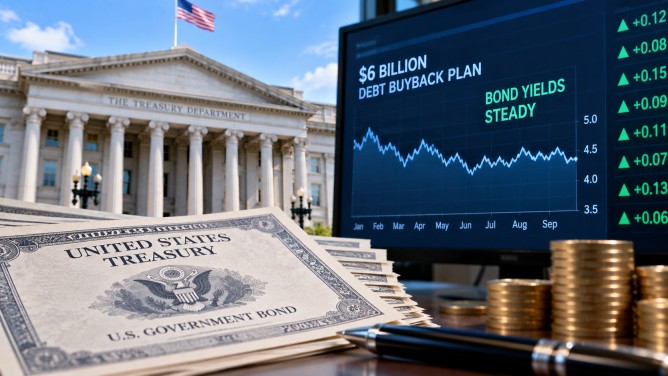
The U.S. Treasury’s recent attempt to reduce borrowing costs by initiating a $6 billion buyback of its securities has faced resistance from the bond market, as government bond yields continue to climb. Announced by Treasury Secretary Scott Bessent on Wednesday, the buyback was intended to alleviate a selloff that has been driving interest rates higher. However, the measure fell short of calming investor fears, leading to the 10-year Treasury bond yield reaching its highest point in three years.
Yields on 30-year Treasuries have surged to approximately 5.2%, marking their highest level since the financial crisis of 2008. The bond market turmoil is fueled by ongoing inflation concerns and geopolitical tensions, particularly the conflict in Iran, which is contributing to the rising strain on U.S. government debt. Traditionally considered one of the safest investment assets globally, U.S. government debt is now under increasing scrutiny.
In a move announced back in August, Bessent revealed that the Treasury would expand its debt buyback operations significantly, aiming to stabilize the market by doubling its usual efforts. This strategy seeks to lower yields by reducing the availability of bonds for investors. Despite these actions, bond yields have persisted in their upward trend, casting doubts on the effectiveness of the Treasury’s strategy.
The U.S. government’s debt levels have soared, surpassing $40 trillion in August, a figure that has doubled over the past ten years. Rising yields on Treasuries could lead to higher borrowing costs for American consumers, affecting mortgage rates, student loans, and auto financing. This situation is compounded by the Federal Reserve’s ongoing struggle to manage inflation, which, even after easing to 3.4% in July, remains above last year’s levels due to surging energy prices.
With Brent crude oil prices exceeding $100 per barrel amid escalating Middle East tensions, the Federal Reserve faces a complex task of balancing inflation control with responding to political pressures. President Donald Trump has been vocal in advocating for lower interest rates, adding another layer of difficulty to the central bank’s policy considerations.