
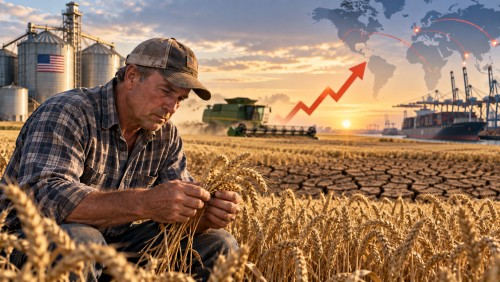
The global wheat market is facing significant challenges as drought conditions, rising production costs, and geopolitical disruptions converge to impact supply and pricing. In the United States, these factors have driven wheat prices to their highest level in three years, yet American farmers are not necessarily benefiting from the increase.
Kansas and other parts of the southern Great Plains are experiencing severe drought, which has led to damaged crops and, in some cases, complete harvest losses. This situation is compounded by the rising costs of diesel, fertilizer, and other essential inputs, which are eroding the potential financial gains from higher wheat prices.
Globally, wheat supply concerns are intensifying as similar drought conditions affect Europe. The looming El Niño weather pattern could introduce further uncertainty, potentially worsening conditions in key wheat-producing regions or, conversely, bringing much-needed rain to areas like the southern Great Plains.
Geopolitical tensions are also playing a role, particularly in the Black Sea region, which is crucial for international grain shipments. Damage to port facilities there has complicated the transportation of wheat, adding to global price pressures and raising concerns about food security.
For consumers, the combination of reduced harvests, unpredictable weather, and disrupted trade routes could lead to higher food prices. Wheat is a staple ingredient in many products, including bread, making the potential impact on everyday costs significant.
In response to rising prices, some U.S. farmers may consider increasing the acreage dedicated to wheat. However, the long-term trend has seen a decline in wheat production as crops like corn and soybeans have become more lucrative. To sustain their operations, farmers will need wheat prices to remain high enough to cover escalating production costs and weather-related risks. The outlook for the next growing season will largely hinge on rainfall patterns, crop yields, and developments in the global grain market.