
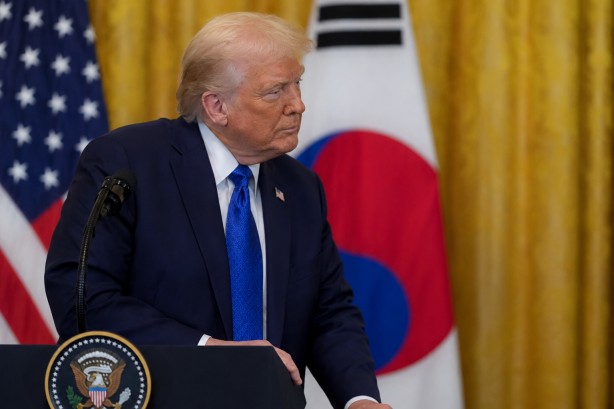
Amid discussions to rejuvenate the United States’ aging naval forces, President Donald Trump has suggested that South Korean shipbuilders might be instrumental in this modernization effort. Speaking at the Pennsylvania Defense and Innovation Summit, Trump emphasized the necessity of bolstering the naval fleet and hinted at the possibility of acquiring vessels built outside US borders. The president pointed to potential collaborations with companies from South Korea and other nations to achieve this goal.
In a notable move, Trump announced that two National Security Multi-Mission Vessels are slated for construction at Hanwha Philly Shipyard in Philadelphia, a project estimated to be worth around $1.5 billion. This announcement is part of a broader pattern of increasing defense collaboration between the United States and South Korea. Recently, South Korean President Lee Jae Myung disclosed that Trump had inquired about South Korea’s ability to swiftly construct 10 naval vessels for the US, a topic that has been discussed in recent international meetings.
The US Department of Defense and the Navy have expressed interest in South Korean shipbuilding expertise by reaching out to key players like HD Hyundai Heavy Industries and Hanwha Ocean. The intention is to evaluate these companies’ capabilities in the design and construction of combat ships. Of particular note, Hanwha, after acquiring a shipyard in Philadelphia in 2024, is seen as strategically positioned to benefit from this partnership. The company is actively pursuing licenses to manufacture military ships within the United States.
Meanwhile, other South Korean giants such as HD Hyundai and Samsung Heavy Industries are forging deeper ties with American firms as part of their strategy to break into the US naval shipbuilding sector. However, despite the promising prospects for international collaboration, significant legal hurdles exist. Current US legislation restricts the construction of naval vessels outside the country, which means any move to build ships overseas would require legislative changes or specific exemptions.