
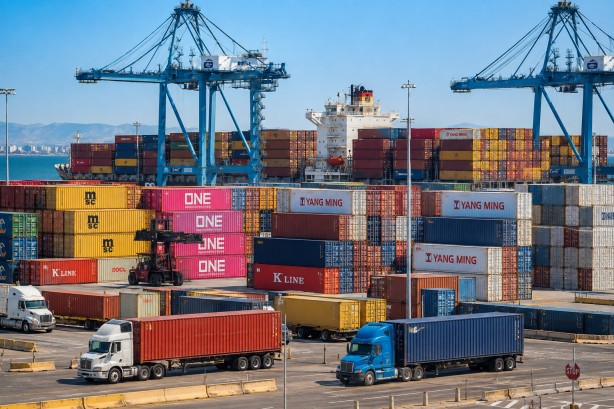
The United States government has issued refunds totaling about $100 billion in tariffs that were initially collected under President Donald Trump’s “Liberation Day” trade policies. This move comes after the Supreme Court determined that a significant portion of these tariffs was unlawful. The returned funds represent roughly 60% of the $165 billion accrued before the court’s ruling. These tariffs, primarily targeting imported goods, were a cornerstone of Trump’s trade agenda, which aimed to elevate domestic manufacturing, secure more advantageous trade deals, and bolster government revenue.
In light of the Supreme Court’s decision, the administration has returned the tariffs to the companies that were affected. Despite these significant reimbursements, the federal budget deficit has seen continued growth, escalating to $1.37 trillion in the first nine months of the fiscal year. This financial strain underscores the challenges faced by the government in balancing fiscal policy with legal mandates.
Even as the refunds were being processed, the Trump administration initiated a fresh batch of tariffs last month. These new tariffs, ranging from 10% to 12.5%, apply to imports from over 80 countries, including major trading partners such as India, China, the United Kingdom, Canada, Mexico, Australia, and members of the European Union. The administration justified these tariffs by pointing to concerns over products associated with forced labor.
The introduction of these latest tariffs has sparked new legal battles. A coalition of 25 U.S. states has filed a legal challenge, arguing that the new tariffs unlawfully replace those previously invalidated by the Supreme Court. This coalition is seeking to block the implementation of these measures, further complicating the administration’s trade strategy.