
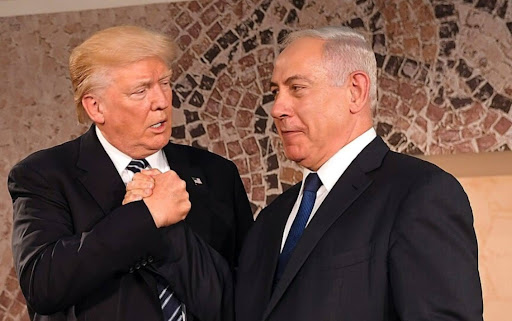
Every military conflict eventually produces a negotiating moment — a point at which the costs of continued fighting create pressure to find a diplomatic resolution. US President Donald Trump appears to be managing the Iran war with that eventual off-ramp in mind. His increasingly defined nuclear containment objective, his retreat from regime-change rhetoric, and his skepticism about Iranian regime transformation all suggest a leader who is thinking about what an acceptable endpoint looks like. Israeli Prime Minister Benjamin Netanyahu, by contrast, shows no visible interest in off-ramps. He is pursuing something closer to comprehensive victory — a reshaping of the regional order that does not have a negotiated version.
The difference in orientation toward off-ramps is one of the most practical expressions of the strategic divergence that Director of National Intelligence Tulsi Gabbard confirmed before Congress. Trump’s nuclear containment objective has a plausible off-ramp: a sufficiently degraded Iranian nuclear program, potentially backed by a monitoring arrangement, could constitute a basis for reducing active military operations. Netanyahu’s transformation objective does not — there is no negotiated of regime change that both sides could accept.
The South Pars gas field strike illustrated the tension between these orientations. Trump’s concern about the strike was partly about its consequences for off-ramp options — escalations that trigger broad Iranian retaliation, spike global energy prices, and alarm Gulf allies make the diplomatic environment harder to manage and the path toward any eventual resolution less clear. Netanyahu’s rationale for the strike was the opposite: each escalation that weakens the Iranian state moves the conflict toward the comprehensive victory he is pursuing.
Managing the tension between Trump’s off-ramp orientation and Netanyahu’s victory orientation will become increasingly important as the conflict matures. Early phases of military campaigns allow partners to paper over strategic differences with tactical cooperation. Later phases — when the shape of the endgame becomes more pressing — require more explicit alignment on where the conflict is headed. Trump and Netanyahu have not yet had that alignment conversation in public terms, and the South Pars episode suggests they may need to.
The alliance’s ability to navigate toward an eventual resolution that both governments can accept as sufficient depends on bridging the gap between Trump’s manageable endpoint and Netanyahu’s ambitious vision. Whether a synthesis is possible — and what it looks like — is the most important strategic question the two leaders have not yet answered.