
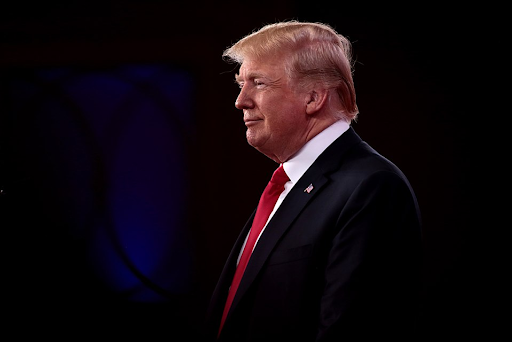
Donald Trump has scolded South Korea in unusually sharp and personal terms with a clear and unambiguous ultimatum, threatening to impose comprehensive 25% tariffs on major exports unless the legislature takes immediate, decisive, and concrete action on implementing a 2024 trade agreement that has remained unimplemented far longer than Trump considers acceptable or defensible. The president’s scolding, delivered through his characteristic social media communications style that bypasses traditional diplomatic channels and protocols, places responsibility entirely and exclusively on the Korean National Assembly for what Trump characterizes as deliberate legislative inaction, political gamesmanship, and outright failure to honor solemn commitments made by Korea’s executive leadership during carefully orchestrated summit diplomacy. The ultimatum encompasses sweeping tariff increases that would affect virtually every major category of Korean exports to the United States, including automobiles and all related automotive components and parts, pharmaceuticals and medical devices, lumber and forestry products, electronics and advanced technology products, steel and aluminum products, and a comprehensive range of manufactured and semi-manufactured goods that collectively account for tens of billions of dollars in annual bilateral trade and support hundreds of thousands of Korean manufacturing jobs.
The trade framework that has become the central focus of this escalating dispute was originally negotiated and finalized in October 2024 through direct personal negotiations between Trump and South Korean President Lee Jae Myung during a summit meeting that both governments portrayed at the time as a major diplomatic breakthrough demonstrating how close allies could work through difficult trade issues and reach mutually beneficial agreements through good-faith negotiation rather than escalating confrontation. The comprehensive agreement included extensive and detailed provisions covering multiple aspects of the bilateral economic relationship, with the most economically significant elements involving American tariff reductions on Korean automobiles and manufactured goods in exchange for substantial Korean investment commitments in American manufacturing facilities, infrastructure projects, technology development partnerships, and other initiatives designed to create American jobs and reduce trade imbalances. Specifically, the agreement provided for immediate reduction of American tariffs on Korean automobiles from the punitive 25% level that Trump had imposed during earlier trade disputes to a more competitive 15% rate that would substantially improve Korean manufacturers’ ability to compete against Japanese and European rivals in the crucial American market.
The trade framework negotiated last year has faced persistent and seemingly intractable implementation challenges stemming from fundamental disagreements, constitutional disputes, and political controversies about whether the agreement requires formal legislative ratification by the Korean National Assembly under Korean constitutional law or whether South Korea’s executive branch possesses sufficient inherent constitutional authority to implement the commitments through administrative regulations, executive orders, and other actions that would not require parliamentary approval or involvement. The Korean presidential office and its legal advisors have consistently and firmly maintained that the agreement was deliberately, carefully, and specifically structured as a memorandum of understanding rather than a formal binding treaty precisely and specifically to avoid triggering the lengthy, politically complex, often contentious, and highly uncertain ratification process that would be required under Korean constitutional law and established legal precedent for international treaties that create binding legal obligations and commitments. However, this legal interpretation and constitutional analysis has been vigorously, persistently, and comprehensively challenged by opposition political parties seeking political advantage, academic constitutional law scholars raising legitimate legal concerns, and various civil society organizations and advocacy groups who argue forcefully that international commitments involving such enormous economic implications, substantial financial obligations, and far-reaching policy consequences should absolutely require legislative approval, democratic oversight, public accountability, and transparency to ensure alignment with fundamental constitutional principles.
Korean government officials expressed shock, surprise, and considerable diplomatic embarrassment at receiving absolutely no advance warning, notice, or consultation before Trump’s public scolding and tariff ultimatum, learning about this dramatic and potentially devastating shift in American trade policy through social media announcements and news reports rather than through the confidential diplomatic communications, advance consultations, and careful coordination that typically and customarily precede major policy changes affecting allied nations that maintain extensive and multifaceted military alliances, deep security partnerships, and highly integrated economic relationships that have developed and strengthened over more than seven decades. The Korean government is now mobilizing what officials describe as maximum-priority emergency responses and crisis management efforts across multiple simultaneous channels and approaches, including immediately dispatching the country’s most senior and experienced trade officials and diplomats to Washington for urgent face-to-face consultations with Commerce Secretary Howard Lutnick, Trade Representative Katherine Tai, and other senior Trump administration officials in a desperate attempt to prevent or at least delay immediate implementation of the threatened tariffs, while simultaneously working around the clock with parliamentary leaders representing both the ruling party and major opposition parties to build the broadest and strongest possible political consensus for expedited legislative action that would provide the necessary legal framework and constitutional authorization for implementing Korea’s specific commitments under the trade agreement.
South Korea’s critically important automotive manufacturing industry and the extensive ecosystem of supporting parts suppliers, logistics companies, and related businesses face the most severe, immediate, and potentially catastrophic economic exposure to Trump’s threatened tariff increases, as this vital sector currently exports nearly half of its total production volume to the insatiable American market and accounts for approximately 27% of all Korean exports to the United States, making it absolutely central and essential to Korea’s export-oriented economic development model, overall trade balance, foreign exchange earnings, and employment base throughout the country. Major automobile manufacturers like Hyundai Motor Group and Kia Corporation, along with hundreds of parts and components suppliers of various sizes, have invested multiple decades of sustained effort, enormous financial resources totaling tens of billions of dollars, and incalculable management attention and expertise in painstakingly building their American market presence, brand recognition, customer loyalty, and competitive position from essentially zero market share decades ago to the substantial and hard-won positions they occupy today that allow them to compete effectively, albeit with great difficulty and constant effort, against much larger, better-established, more financially powerful, and often government-supported Japanese manufacturers like Toyota and Honda, prestigious German luxury brands like BMW and Mercedes-Benz, and massive American manufacturers like General Motors and Ford who have dominated and controlled their enormous home market for more than a century through a combination of product quality, brand loyalty, dealer networks, and political influence.
This sharp scolding and clear ultimatum threatening comprehensive tariff increases fits unmistakably and perfectly within Trump’s thoroughly documented, widely observed, and extensively analyzed pattern and consistent approach throughout his political career of using trade policy extremely aggressively, without apology or hesitation, as the primary, preferred, most effective, and often virtually exclusive instrument of foreign policy across virtually every conceivable dimension of international relations, extending far beyond traditional and conventional trade balance concerns to encompass military burden-sharing in security alliances, diplomatic alignment and voting patterns on contentious global issues in international organizations, immigration cooperation and border security, technology transfer and intellectual property protection, and numerous other areas where Trump firmly and unshakably believes that America’s enormous and unmatched economic power, the critical importance that virtually all other nations place on maintaining access to wealthy American consumers and the vast American market, and the devastating consequences that would follow from restricted market access provides tremendous leverage and influence that should be deployed boldly, aggressively, and without the excessive caution, diplomatic niceties, or concern for allied sensibilities that Trump views as having characterized and weakened previous administrations’ foreign policy approaches.