
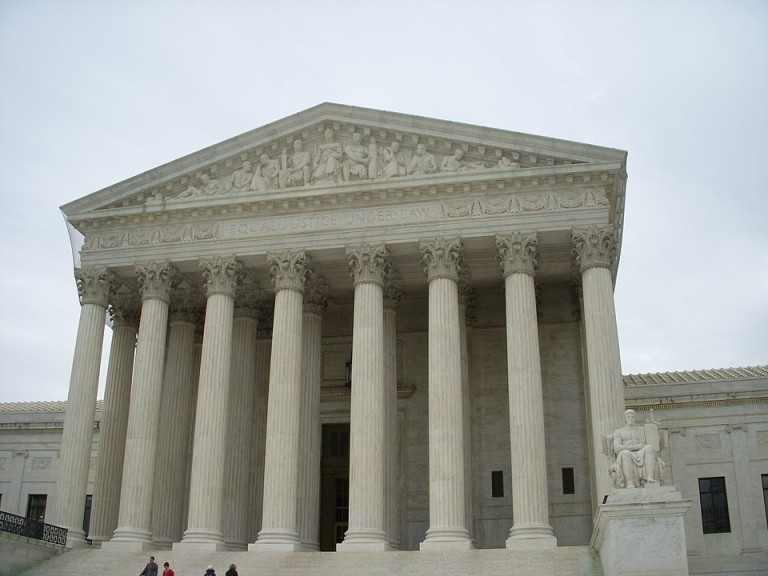
In a significant decision, the US Supreme Court upheld the Federal Communications Commission’s (FCC) authority to impose financial sanctions via its internal processes. The court’s 8-1 ruling dismissed objections lodged by telecommunications giants AT&T and Verizon, who contended that the FCC’s enforcement mechanisms infringed upon their constitutional entitlement to a jury trial. Chief Justice John Roberts authored the majority opinion, while Justice Clarence Thomas dissented.
The dispute revolved around penalties levied by the FCC against major wireless carriers, accused of permitting third parties to access customer location data without obtaining appropriate user consent. As a result, the FCC fined AT&T approximately $57 million and Verizon nearly $47 million, with other carriers also facing fines for similar breaches of data privacy.
AT&T and Verizon challenged the FCC’s in-house enforcement system, arguing it deprived them of their right to have such cases adjudicated by a jury. However, the Supreme Court determined that the FCC’s process does not preclude companies from subsequently contesting penalties in federal court, thus ensuring judicial oversight remains available.
This ruling is a considerable win for the federal government, as it fortifies the FCC’s capacity to utilize administrative proceedings for assessing penalties. The decision underscores the authority of regulatory agencies in enforcing compliance within their respective domains, reinforcing their role in maintaining oversight over corporate practices.