
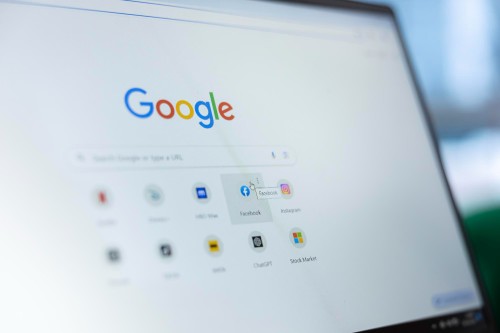
On Tuesday, Google unveiled plans to enhance its renowned search bar with advanced artificial intelligence capabilities, marking a significant move in the realm of digital search. At their annual Google I/O conference for developers, the company also introduced a new line of hi-tech eyewear, revisiting the concept years after the initial Google Glass faced widespread mockery. The upgraded search feature is designed to handle more intricate and natural language queries, reflecting conversational questions users might pose to each other. This update will encourage users to interact directly with Google’s chatbot, powered by their latest AI model, Gemini 3.5, which was also announced during the event.
The Gemini model promises to boost the predictive capabilities of Google Search, offering longer and more detailed text predictions based on user inputs. The search experience will now include more visual components and recommendations for using Google’s AI across various products, such as creating calendar events or spreadsheet plans. According to Elizabeth Reid, who leads the search product, these changes represent the most significant evolution Google Search has experienced in nearly three decades. As these updates become available globally on both desktop and mobile platforms, users can expect more visually dynamic results resembling AI Overviews, yet the traditional link-based search will remain accessible under a “Web” tab.
Reid highlighted that Google Search queries reached unprecedented levels last month, with the introduction of “AI Mode”—where users interact with a Gemini-powered bot—driving this surge. This mode has seen query numbers double each quarter since its launch. Enhancing the search bar’s functionality, users who upload photos, videos, or documents in Chrome will automatically trigger AI mode. Josh Woodward, in charge of developing Gemini, emphasized its aim to become a “universal assistant”—a tool that’s personal, proactive, and persistent. While Google boasts 900 million monthly Gemini app users, it still trails behind ChatGPT’s 900 million weekly users.
For those subscribing to Google’s AI Pro and Ultra plans, the new search capabilities will include “information agents,” autonomous bots designed to conduct thorough research and provide summaries or actionable plans. A “generative user interface” will allow for the creation of tailored visuals and interactive elements like dashboards. Additionally, a feature called Gemini Spark will leverage information from users’ Gmail, Google Calendar, and other Google services to assist with tasks such as research, shopping, and planning events.
In partnership with Samsung and eyewear brands Warby Parker and Gentle Monster, Google introduced “intelligent eyewear”—a blend of sunglasses and eyeglasses with voice command and camera functionalities, set to launch in the fall. This initiative follows in the footsteps of Meta, who since 2021 has offered similar technology through a collaboration with EssilorLuxottica. Google’s previous venture with Google Glass in 2014 was met with criticism and discontinued the next year. However, the current landscape suggests a shift in consumer attitudes, as Meta views augmented-reality glasses as a key growth area, and Google is already working on a second version of smart glasses, known as Project Aura, featuring an in-lens display.